Ever counted how many times you’ve said “I’ll join a gym next month” while watching Netflix in pajamas? You’re not alone. Millions of fitness plans die on the couch daily.
But here’s the truth: you don’t need expensive equipment or awkward locker room encounters to get fit. The most effective home workouts for staying fit without a gym require just your body weight and determination.
What if the perfect workout routine was hiding in your living room all along? Not those impossible Instagram routines that require the flexibility of a gymnast, but real, doable exercises that actual humans can complete.
I’ve tested dozens of home workout methods after my gym membership expired. The results shocked me, and what I discovered about fitness motivation might surprise you too.
Beginner routine
A. Bridge
No fancy equipment needed here – just you and your body weight. Lie on your back, knees bent and feet flat on the floor. Press your lower back into the floor, then lift your hips until your body forms a straight line from shoulders to knees. Hold for 3 seconds, then lower. Do 10-15 reps.
This move is gold for your glutes and core. Having trouble? Keep your feet closer to your butt. Want more challenge? Extend one leg straight while holding the position.
B. Chair Squat
Grab a sturdy chair and stand in front of it. Feet shoulder-width apart, toes slightly turned out. Lower your butt toward the chair like you’re about to sit, but just barely touch the seat before standing back up.
Most beginners make the mistake of leaning forward – don’t do that! Keep your chest up and core tight. Aim for 10-12 reps and work up from there.
C. Knee Pushup
The perfect stepping stone to full pushups. Start in a plank position but with your knees on the ground. Lower your chest toward the floor while keeping your back flat. Push back up to the starting position.
I can’t stress this enough – don’t let your hips sag! That’s a one-way ticket to back pain. Do 8-10 reps at first, focusing on form over quantity.
D. Stationary Lunge
Stand tall, step one foot forward, and lower your body until both knees form 90-degree angles. Your back knee should hover just above the floor. Push through your front heel to return to standing.
Do 8-10 reps on each leg. Your front knee shouldn’t push past your toes – if it does, take a bigger step forward.
E. Plank to Downward Dog
Start in a forearm plank. Push your hips up and back while straightening your arms, forming an inverted V-shape with your body. Hold for a breath, then return to plank. Repeat 8-10 times.
This move transitions between strength and flexibility – perfect for beginners looking to build both.
F. Straight-leg Donkey Kick
On all fours, keep one knee bent at 90 degrees and lift that leg until your thigh is parallel to the floor. Keep your back flat and core engaged. Do 12-15 reps per side.
The key here? Controlled movement. Don’t swing your leg up like you’re trying to kick a ceiling fan.
G. Bird Dog
Another all-fours move. Extend your right arm forward while extending your left leg backward. Hold for 2 seconds, return to start, then switch sides. Aim for 8-10 reps per side.
This looks simple but challenges your balance and core stability like crazy.
H. Forearm Plank
Position yourself face down with forearms on the floor, elbows under shoulders. Lift your body so only your forearms and toes touch the ground. Keep your body straight as a board.
Start with 20 seconds and work up. Your body should form a straight line from head to heels – no sagging hips or lifted butts!
I. Side-lying Hip Abduction
Lie on your side with legs stacked. Keeping your top leg straight, lift it up about 45 degrees, then lower slowly. Do 12-15 reps, then switch sides.
Feel the burn in your outer thigh and hip? That’s exactly what we want.
J. Bicycle Crunch
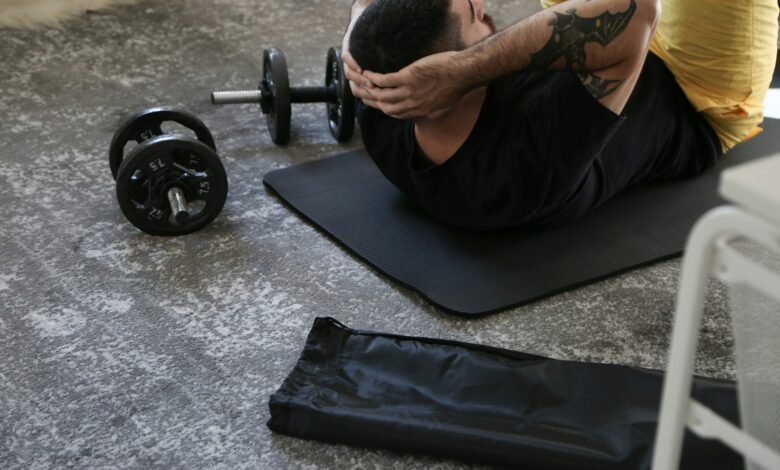
Lie on your back, hands behind your head, knees bent. Lift your shoulders off the floor and bring one knee toward your chest while twisting to touch that knee with the opposite elbow. Alternate sides in a pedaling motion.
Do 10-12 reps per side. This targets your entire core, especially those stubborn obliques.
Intermediate routine
Intermediate Routine
Ready to kick things up a notch? This intermediate routine challenges your strength, balance, and endurance without a single piece of equipment. Do each exercise for 45 seconds with 15 seconds rest between moves. Complete the circuit 3 times with a 1-minute break between rounds.
A. Bridged March
Lie on your back, knees bent, feet flat on the floor. Lift your hips into a bridge position, creating a straight line from shoulders to knees. While holding this position, lift one foot off the ground and bring your knee toward your chest. Lower and repeat with the other leg in a marching motion. Keep your hips stable—no dropping or tilting!
B. Squat
Stand with feet shoulder-width apart. Send your hips back like you’re sitting in a chair, keeping your chest up and knees tracking over your toes. Drop until thighs are parallel to the floor (or as low as you can with good form). Drive through your heels to stand back up. These aren’t your gym class squats—go slow and feel the burn.
C. Pushup
Start in a high plank position, hands slightly wider than shoulders. Lower your chest toward the floor by bending your elbows at about a 45-degree angle from your body. Push back up to starting position. Can’t do a full pushup yet? No shame in dropping to your knees—just keep your back flat and core tight.
D. Forward and Backward Lunge
Stand tall, then step forward with one leg, lowering until both knees form 90-degree angles. Push through your front heel to return to start. Next, step backward with the same leg into a reverse lunge. That’s one rep. Alternate legs. These will set your quads on fire while testing your balance.
E. Pike Pushups
Start in a downward dog position, forming an inverted V with your body. Bend your elbows to lower your head toward the floor, then push back up. This targets your shoulders more than regular pushups and builds strength for handstands down the road.
F. Kneeling Squat
Kneel with your thighs perpendicular to the floor. Sit back toward your heels, then return to the starting position without using your hands. This might look easy but challenges your quads in a whole new way.
G. Superman
Lie face down with arms extended overhead. Simultaneously lift your arms, chest, and legs off the floor, holding for 2-3 seconds at the top. Lower back down with control. Your back will thank you for these.
H. Plank with Alternating Leg Lift
Hold a forearm plank position, body forming a straight line. Keeping your hips level, lift one leg about 6-12 inches, hold briefly, then switch legs. Seems simple until about 30 seconds in!
I. Kneeling Side Plank with Hip Abduction
Start in a side plank position, but with your bottom knee on the floor for support. Raise your top leg as high as possible, then lower it without touching your bottom leg. This targets those hard-to-reach side glutes.
J. Dead Bug
Lie on your back with arms extended toward the ceiling and knees bent at 90 degrees over your hips. Slowly extend one leg and the opposite arm away from you while keeping your lower back pressed into the floor. Return to start and repeat on the other side. Looks ridiculous, works miracles for your core stability.
Advanced routine
A. Single leg bridge with leg extended
Ready to turn up the heat? This move targets your glutes like nothing else. Lie on your back, plant one foot firmly on the ground while extending the other leg straight up. Push through your heel to lift your hips high, creating a straight line from shoulders to extended foot. Hold for 2 seconds at the top, then lower with control. Do 12-15 reps per side.
The secret? Don’t let your hips drop or rotate. Keep your core engaged throughout.
B. Overhead squat
This isn’t your average squat. Stand with feet shoulder-width apart, arms extended overhead. As you squat down, keep those arms straight up—this challenges your mobility and stability all at once. Drop as low as you can while maintaining a neutral spine.
Most people mess this up by letting their arms drift forward. Fight to keep them directly above your shoulders through the entire movement. Aim for 3 sets of 10-12 reps.
C. One-legged pushup
Pushups just got serious. Start in a standard pushup position, but lift one leg off the ground. Lower your chest while keeping that leg raised, then push back up. The raised leg creates rotational forces your core must resist.
Too hard? Try it with your foot resting on a low object first. Work toward 8-10 reps per side.
D. Jumping lunges
These will skyrocket your heart rate and build explosive power. Start in a lunge position, then explode upward, switching legs mid-air to land in the opposite lunge. The key is landing softly by absorbing the impact through your muscles, not your joints.
These are tough, so start with just 30 seconds and build up to 45-60 second sets.
E. Elevated pike pushups
Place your feet on a chair or couch with hands on the floor in a pike position (hips high, forming an inverted V). Lower your head toward the floor between your hands, then push back up. This targets your shoulders much like an overhead press would.
Focus on controlled movement rather than speed. Shoot for 3 sets of 8-12 reps.
F. Kneeling squat with jump
Begin kneeling on both knees. Explosively drive one foot forward to plant it on the ground, then jump up to standing. Land softly and return to the kneeling position. Alternate legs for each rep.
This move builds serious power through your hips and quads. Start with 5 reps per leg and work up gradually.
G. Advanced Bird Dog
The standard bird dog got an upgrade. Start on all fours, then extend opposite arm and leg. Now add these challenges: touch your elbow to your knee under your body, then re-extend. Or try drawing small circles with your extended limbs while maintaining perfect balance.
Keep your movements slow and controlled. Aim for 10-12 reps per side.
H. One-leg forearm plank hold
Get into a forearm plank position, then lift one leg 6-8 inches off the ground. Hold this position while keeping your hips completely level—no rotation or dipping! This seemingly small adjustment dramatically increases the core challenge.
Start with 20-second holds per leg and build up from there.
I. Side plank with hip abduction
From a side plank position resting on your forearm, lift your top leg as high as possible while maintaining form. Lower and repeat. This hits your obliques and hip abductors simultaneously.
Form check: don’t let your hips sink forward or backward. Keep them stacked. Aim for 10-12 reps per side.
J. Hollow hold to jackknife
Lie on your back, arms extended overhead. Lift your shoulders and legs off the ground in a “hollow” position. Then, explosively bring your arms and legs together to meet in the middle (the jackknife), before returning to the hollow position.
This absolutely crushes your core. Begin with 8-10 reps and increase as you build strength.
Frequently asked questions
Are 20-minute home workouts effective?
Absolutely! Twenty-minute workouts can be incredibly effective if you structure them properly. The key is intensity. A focused, high-intensity 20-minute session will always beat an hour of half-hearted exercise.
The science backs this up too. Research shows that short HIIT (High-Intensity Interval Training) workouts can burn more calories and improve fitness faster than longer, steady-state exercises. When you’re working out at home with limited time, focus on compound movements that engage multiple muscle groups simultaneously – think burpees, mountain climbers, and squat jumps.
Here’s the deal though – consistency matters more than duration. A 20-minute workout you actually do five times a week beats the perfect hour-long workout you only do once.
Do home workouts really work?
They sure do! I’ve seen countless clients transform their bodies without ever stepping foot in a gym.
Home workouts work because exercise is exercise, regardless of location. Your muscles don’t know if you’re in a fancy gym or your living room – they only respond to the resistance and intensity you provide.
The effectiveness depends on:
- Progressive overload (gradually increasing difficulty)
- Proper form and technique
- Consistency and frequency
- Diet and recovery
Many people actually find better results at home because they’re more comfortable, save commute time, and can fit workouts into their schedule more easily. No waiting for equipment either!
What exercises burn belly fat?
Let’s clear something up – you can’t spot-reduce fat from specific areas. Your body loses fat holistically based on genetics and hormones.
That said, these exercises help burn the most calories overall, which contributes to total body fat loss:
- Burpees (the ultimate calorie torcher)
- Mountain climbers
- Russian twists
- Bicycle crunches
- Plank variations
- HIIT circuits
The secret sauce is combining these exercises with:
- A calorie deficit through diet
- Consistency with your workout schedule
- Adequate sleep and stress management
Core-focused exercises will strengthen your abdominal muscles, making them more visible once you reduce overall body fat. But remember – abs are made in the kitchen more than anywhere else!
The bottom line
The bottom line
Working out at home isn’t just a backup plan—it’s a legitimate fitness strategy that works. You don’t need fancy equipment or a gym membership to get strong, build endurance, or stay healthy. The key is consistency and gradual progression.
Start where you are. Whether you’re doing push-ups against the wall or cranking out one-arm variations, your body doesn’t know the difference between a gym and your living room—it only responds to the challenge you give it.
Mix up your routine with cardio, strength training, and mobility work. Pay attention to your form, listen to your body, and adjust as needed. Rest days aren’t optional—they’re when the magic happens as your muscles recover and grow stronger.
Remember that fitness isn’t a destination; it’s a journey. Some days will be harder than others, but showing up for yourself is what counts. Your home workout habit might start as a necessity, but stick with it long enough, and you might find you prefer the convenience, privacy, and efficiency of training at home.
How we reviewed this article
Our team consulted certified personal trainers, exercise physiologists, and fitness enthusiasts who primarily train at home. We tested dozens of bodyweight exercises and home workout routines across all fitness levels to ensure our recommendations are effective and achievable.
We also reviewed recent scientific research on the effectiveness of home-based exercise programs compared to gym workouts. The evidence consistently shows that consistency matters more than location or equipment.
Read this next
- 15-Minute Morning Workouts to Energize Your Day
- How to Create Your Own Home Gym on Any Budget
- Nutrition Basics: Fueling Your Workouts Without Counting Calories
- Preventing Injuries: Safe Home Exercise Techniques
- 5 Ways to Stay Motivated When Working Out Alone
Staying fit from home doesn’t require expensive equipment or a gym membership – just dedication and the right approach. Whether you’re following our beginner routine with basic bodyweight exercises, challenging yourself with the intermediate plan’s added resistance, or pushing your limits with the advanced routine’s complex movements, consistency is key to seeing results.
Remember that fitness is a journey unique to you. Start at your comfort level, progress at your own pace, and adjust workouts to suit your needs. With the home workout plans outlined in this guide, you have everything needed to build strength, improve cardiovascular health, and enhance flexibility – all from the comfort of your living room. Your fitness goals are within reach – now it’s time to get moving!