
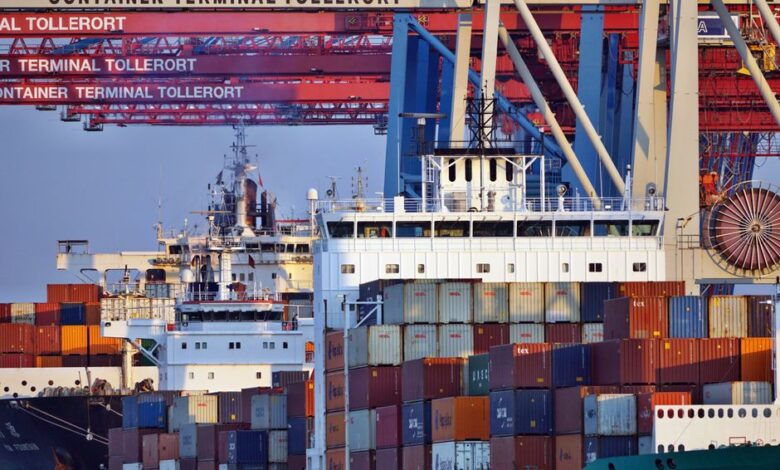
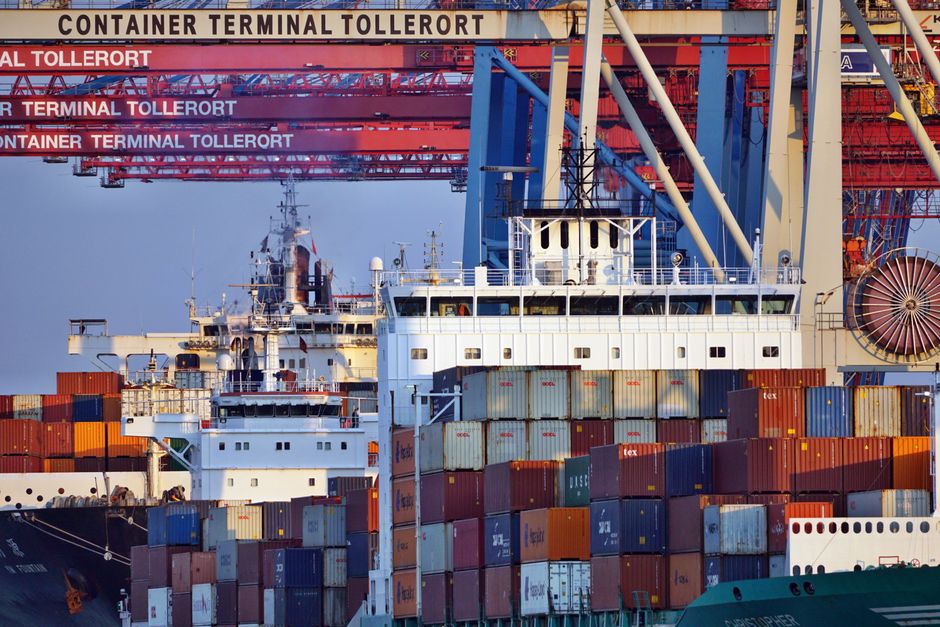
When container ships started backing up at ports again last month, it wasn’t just logistics news—it was a signal that global trade tensions have shifted into a new, more unpredictable phase. Unlike the tariff wars of 2018–2019, today’s economic friction involves reshored manufacturing, geopolitical alignment of supply chains, and a fragmentation that economists argue may be permanent. I sat down with Dr. Marcus Chen, who studies international trade policy at the Brookings Institution, to understand what’s actually happening beneath the headlines and what it means for ordinary people watching inflation and job markets.
The Shape of Trade Friction Today
Q: Most people remember 2018’s tariffs. How is what we’re seeing now different?
Dr. Chen: Back then, it felt more transactional—tariffs went up, negotiations happened, deals got struck. What we’re watching now is structural. Companies are actively moving production out of China, not because of specific tariffs tomorrow, but because they don’t trust the political environment five years from now. We’re seeing nearshoring to Mexico, India, Vietnam, the Philippines. But here’s what surprises people: it’s not cheaper. It’s intentional fragmentation.
The numbers tell that story. According to the Reshoring Institute, reshoring announcements in the U.S. manufacturing sector jumped 34% year-over-year in 2023, with semiconductor and battery manufacturing leading the charge. But the cost difference is real. A factory in Vietnam costs 15–20% more than an equivalent operation in southern China, yet companies still do it. That’s risk premium in action.
Q: Risk premium—but risk of what, exactly?
Dr. Chen: Three things. First, supply-chain risk. If you’re Toyota or Apple, you can’t afford a geopolitical shock that cuts off your main production hub. Taiwan dependency for semiconductors keeps Western tech executives up at night. Second, there’s regulatory risk—the kind you can’t predict. Third, reputation risk. Consumers and investors increasingly scrutinize where things are made, especially in sensitive sectors like defense, energy, and critical materials.
I interviewed supply-chain directors at three Fortune 500 companies last quarter. None of them used the word ‘China’ in discussions about new capacity. They said ‘concentrated risk’ or ‘single-source exposure.’ The vocabulary changed before the strategy did.
Who Bears the Cost?

Ann H
Q: Reshoring sounds patriotic. What’s the catch?
Dr. Chen: It’s not cheap, and someone pays. Manufacturing wages in the U.S. industrial heartland have risen 7.2% annually since 2021—partly because companies are competing for skilled labor as capacity expands. That’s good for workers in Ohio or Michigan. But consumer goods prices stay elevated because production costs are higher. A t-shirt made in Vietnam with Chinese inputs cost $4 to produce; the same shirt made in Mexico with U.S. materials costs $5.50. That margin gets passed along.
The other cost is opportunity. Capital that goes to a semiconductor fab in Arizona doesn’t go to R&D in Silicon Valley. Developing economies lose jobs. Vietnam’s garment industry has shed roughly 200,000 jobs since 2022 as brands diversify sourcing. Bangladesh’s textile sector is under pressure. These aren’t abstract GDP numbers—they’re real people whose livelihoods depend on scale economics that global trade tensions now threaten.
Q: Do we know how long this fragmentation lasts?
Dr. Chen: That’s the trillion-dollar question. My honest answer: we’re not going back to pre-2016 globalization. The question is whether we stabilize at a new equilibrium or keep fracturing. I’d guess we’re in a 5–10 year transition period. Companies are still testing what works. Some nearshoring experiments fail. Some succeed spectacularly. By 2030, I think we’ll see regional supply chains—one centered in the Americas, one in Europe, one in Asia. Not completely separate, but much less integrated than before.
What Does This Mean for Ordinary Economics?
Q: How should people think about this affecting their lives?
Dr. Chen: Watch three things. First, inflation. Goods inflation has cooled since 2022, but reshoring will create upward pressure in specific categories—electronics, appliances, autos. You might see a 5–8% price floor on manufactured goods that don’t drop much lower. Second, employment. Reshoring creates manufacturing jobs, which typically pay better than retail or service work. Wages in production and skilled trades will likely outpace wage growth elsewhere through the end of the decade. That’s not uniform across regions, though. Texas, Indiana, and Ohio benefit more than rural Vermont.
Related Reading
- Is This Poker Player Bluffing? The AI Thinks So—And It’s Winning
- England’s Euro 2024 Loss: When Sports Failure Becomes a Cultural Reckoning
Third, and most subtle: financial volatility. Supply chains affect earnings predictability. Companies with global trade tensions built into their cost structure face margin compression in some quarters and expansion in others. Stock markets hate that unpredictability. You’ll see more market swings tied to supply-chain news than we’ve seen in 15 years.
I also think long-term interest rates stay elevated because reshoring is capital-intensive. The Fed isn’t making that decision alone, but they’re reacting to an economic environment where more capital chases fixed assets rather than circulating as consumption. That affects mortgages, car loans, student loans.
Geopolitics Driving Economics
Q: You mentioned geopolitical alignment. How directly are trade decisions now being made for political reasons?
Dr. Chen: Completely. Trade policy used to be rationalized through economic language—comparative advantage, efficiency, consumer welfare. Now it’s openly strategic. When the U.S. restricts semiconductor exports to China, that’s not economics. It’s industrial policy wrapped in national security language. When the EU proposes a carbon border adjustment mechanism, it’s partly environmental but also protectionist. When India negotiates supply agreements with Japan and Australia, it’s coalition-building against China.
You can track this through official trade documents. The phrase ‘strategic autonomy’ appears in EU policy papers 47 times in 2024, versus twice in 2015. ‘Friend-shoring’ is now real policy terminology at the U.S. State Department. This isn’t conspiracy—it’s what governments publicly say they’re doing. They’ve stopped pretending trade is separate from geopolitics.
The data backs this. According to research from the World Bank’s trade database, new trade restrictions implemented globally jumped from 28 in 2019 to 147 in 2023. Most explicitly cite security or strategic concerns, not economic rationale.
Looking Ahead: What’s Actually Changing
Q: Give us a concrete example of how global trade tensions reshape something people buy.
Dr. Chen: Take lithium-ion batteries. Five years ago, 80% of battery component manufacturing happened in China or relied on Chinese materials. Today, the U.S. has invested over $35 billion in domestic battery capacity under the Inflation Reduction Act. Europe is doing similar things. This isn’t random—it’s deliberate redundancy. A Tesla battery pack made in Texas in 2024 probably has higher mineral costs and labor costs than one made with entirely Chinese inputs would. But that factory exists because Ford, GM, and Tesla decided Chinese supply concentration was unacceptable risk.
Consumers pay for that—maybe $500–$1,200 more per vehicle. But the tradeoff, from a policy perspective, is that North America controls its energy transition. That has geopolitical value that doesn’t show up on a balance sheet. This is what structural trade tensions look like: higher prices, deliberate inefficiency, and a different calculus about what ‘efficient’ even means.
Q: Can this system work long-term?
Dr. Chen: It works if you’re wealthy enough to afford redundancy. For poor and middle-income countries, this is brutal. They relied on scale from global supply chains to build prosperity. That path is closing. You’ll see increasing divergence between rich-country manufacturing (which can be expensive and still profitable) and developing-country manufacturing (which competes on cost and loses). Trade tensions sound abstract, but they’re reshaping where wealth actually gets created.
The optimistic scenario: we stabilize, regional systems work reasonably well, and we get used to 10–15% higher prices on manufactured goods. The pessimistic scenario: this keeps fragmenting, we see retaliatory tariffs spiral, and we get something closer to the 1930s—multiple trading blocs with minimal exchange between them. I’d put odds at 70–30 for the optimistic case, but that’s not certain.
Takeaways for Now
If you’re watching global trade tensions unfold, here’s what matters: First, expect prices on manufactured goods to stay higher than they were in 2015. That’s structural, not cyclical. Second, manufacturing employment will grow in some regions while contracting in others—check whether your area is on the nearshoring map. Third, don’t expect quick resolution. This is a decade-long shift in how supply chains organize themselves. And fourth, pay attention to your company’s earnings calls if you invest—supply chain commentary is now a major driver of stock volatility in a way it wasn’t five years ago.
The world isn’t going back to seamless global integration. We’re building a new system, messier and more expensive, but arguably more resilient. Understanding that shift matters if you’re managing money, planning a career, or just trying to understand why your grocery bill behaves the way it does.
Frequently Asked Questions
What are global trade tensions and why are they happening now?
Global trade tensions refer to rising protectionism, tariffs, and supply-chain fragmentation driven by geopolitical concerns, not purely economic ones. Countries are intentionally reshoring manufacturing and diversifying suppliers away from concentrated sources like China to reduce political risk and ensure strategic autonomy. This shift accelerated after 2020 due to pandemic disruptions and heightened U.S.-China competition.
How do global trade tensions affect consumer prices?
Reshoring and supply-chain diversification increase production costs because manufacturing is more expensive in developed countries than in low-cost regions like China or Vietnam. These higher costs typically get passed to consumers through 5–8% price premiums on manufactured goods like electronics, appliances, and vehicles. Prices are unlikely to drop significantly as long as companies prioritize supply-chain resilience over pure cost efficiency.
Which industries are most affected by current trade tensions?
Semiconductors, lithium-ion batteries, pharmaceuticals, and automotive manufacturing face the most disruption as governments actively reshape supply chains for strategic reasons. Defense, energy, and critical materials also see heavy government intervention. Consumer goods and textiles experience job shifts as production moves away from Asia toward nearshoring locations like Mexico and Southeast Asia.
Will trade barriers eventually be reduced or are they permanent?
Trade restrictions are likely structural rather than temporary—economists expect a 5–10 year transition toward regional supply chains rather than a return to pre-2016 globalization. This reflects a shift from economic optimization to strategic autonomy as the primary trade policy goal. Complete reversal would require major geopolitical reconciliation between the U.S., China, and Europe, which appears unlikely in the near term.
What countries benefit most from global trade tensions?
Mexico, India, Vietnam, and other nearshoring destinations initially gain manufacturing jobs, though at lower scale than China once provided. Developed countries like the U.S., EU, and Japan see manufacturing employment growth and reduced supply-chain dependency. Conversely, developing economies heavily dependent on export-oriented manufacturing, like Bangladesh and Vietnam’s textile sector, face significant job losses as brands diversify sourcing.