
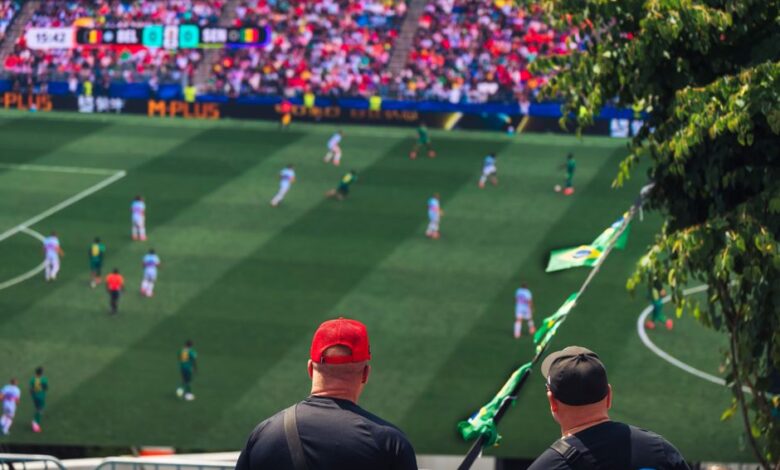
If you caught yourself glued to the screen during the last World Cup, you weren’t alone—but you might have noticed something fundamentally different about how the tournament feels compared to the ones from your childhood. The World Cup today operates under entirely different economic, structural, and competitive pressures than it did even a decade ago, and understanding those differences reveals a lot about where global soccer is headed.
I’ve watched enough World Cup matches across three decades to say this with confidence: the tournament has transformed in ways that go far beyond simply having better athletes or fancier stadiums. The very architecture of the competition—how many teams play, when they play, who profits from it, and what winning actually means for a nation—has shifted dramatically. Some of these changes have genuinely improved the product. Others have diluted what made the World Cup special in the first place.
The Expansion Question: More Teams, Diluted Quality
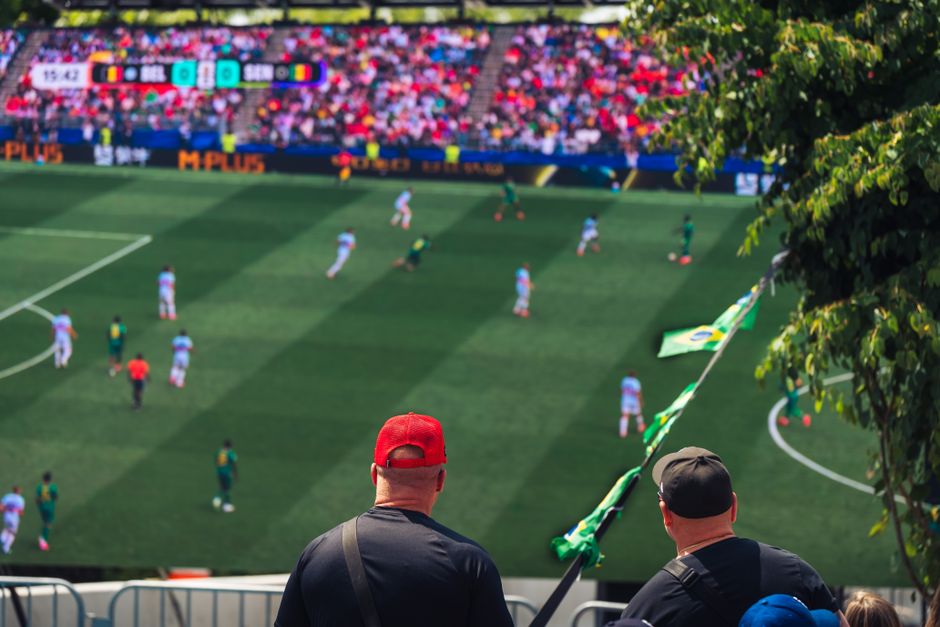
Here’s the most visible change in the World Cup today: the tournament keeps getting bigger. FIFA expanded from 32 teams to 48 teams starting in 2026, a move that fundamentally alters the competition’s character. That might sound like progress—more nations get their shot at glory—but it creates real problems on the pitch.
The 1994 World Cup in the United States featured 24 teams. By 2022 in Qatar, we’d crept back to 32, the standard since 1998. Now we’re jumping to 48. What does this mean practically? More matches, more travel, more fatigue for players who are already squeezed by domestic season demands. But more importantly, it guarantees you’ll see more lopsided matchups where a tier-one nation demolishes a tier-three opponent 5-0 or 6-0.
In 1998 and 2002, the tournament had genuine drama in group stages because every team had a legitimate chance to advance. With 48 teams in a 12-group format (the current proposal), weaker nations will play primarily against each other while powerhouses pad their statistics. It’s better for television scheduling and merchandising. It’s worse for competitive balance.
That said, expansion does something important: it gives nations like Morocco, Costa Rica, and eventually more African and Asian teams realistic pathways to the tournament. In the World Cup today, qualification itself has become more competitive. It’s not perfect, but it’s fairer than the old days when European and South American nations essentially controlled access to the tournament.
The Talent Arms Race: Depth Has Never Been Better
Gera Cejas
While team quality might be diluted, individual talent has concentrated in ways that make the best teams genuinely dominant. The World Cup today features athletes who are faster, stronger, more technically skilled, and better conditioned than their equivalents from 20 years ago.
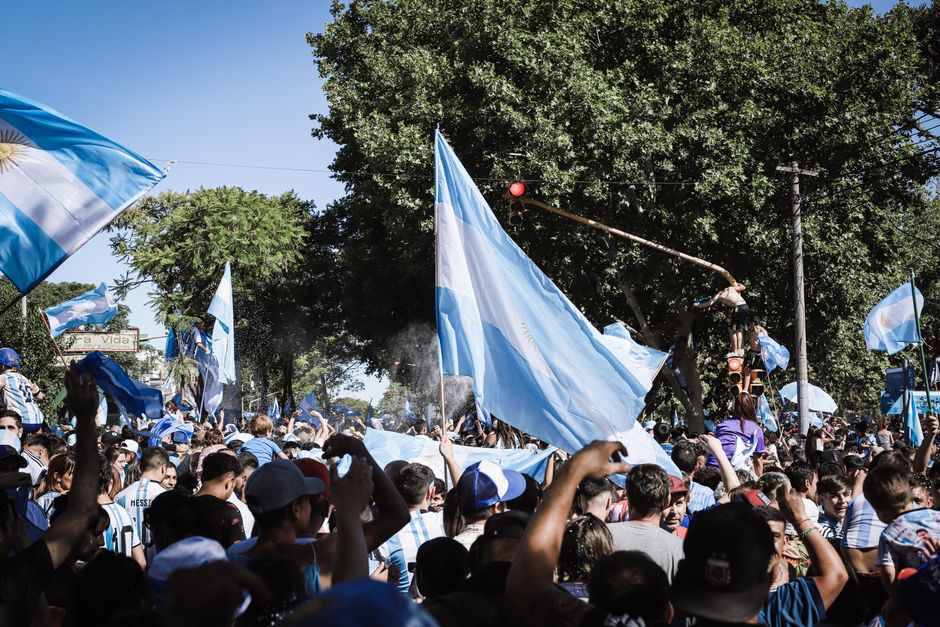
Look at squad depth. In 1998, France won with a core group of maybe 13-14 world-class players. Their bench existed, but it wasn’t packed with Champions League regulars. By 2022, every semifinalist could field two competitive starting XIs. Argentina’s World Cup-winning squad in 2022 included players from Paris Saint-Germain, Manchester City, Real Madrid, and Juventus—not just in the starting lineup but on the bench. That concentration of talent in elite clubs, driven by globalized media rights and sponsorship money, means the gap between first and second tier teams has actually widened.
Data backs this up: the average player at the 2022 World Cup was taller, faster, and had higher VO2 max scores than players from 2010. Goal-scoring efficiency improved. Teams pressed higher up the field. The tactical sophistication required simply to compete has exploded. A journeyman midfielder in 2024 is expected to execute pressing triggers, recognize inverted fullback movements, and transition between defensive shapes—skills that would’ve been considered advanced tactics 15 years ago.
The downside? Smaller nations increasingly can’t compete because they can’t recruit their talent to big leagues fast enough. The World Cup today is more entertaining for those who love elite soccer, but it’s become a less democratic competition.
The Commercial Machine: When Sponsorship Shapes the Game
Money hasn’t just changed how tournaments are funded—it’s changed how they’re played. The World Cup today operates under financial pressures that fundamentally alter decision-making at every level.
Qatar 2022 cost approximately $220 billion when you include infrastructure. Even accounting for stadiums that’ll be used afterward, that’s 10 times what previous tournaments cost. FIFA generates over $7 billion in revenue per tournament cycle. Broadcasters like Fox Sports pay over $425 million just for US rights. This isn’t the World Cup of 1994, when it was primarily a sports event. It’s a global entertainment product with geopolitical dimensions.
These economics create real effects. Scheduling is now built around prime-time television windows in major markets, not what’s optimal for player recovery. The expansion to 48 teams isn’t primarily about development—it’s about selling more matches and advertising. Kit sponsorship has become so lucrative that nations treat it like a ministry budget. And let’s be honest: decisions about where tournaments are held increasingly favor nations with money rather than soccer infrastructure, which is why we’ve seen tournaments in Russia, Qatar, and (coming) Saudi Arabia, regardless of domestic league quality.
The athlete experience has improved financially, though. Players get bonuses, endorsement opportunities, and career-changing visibility that wasn’t available in previous eras. But the competition itself has been reshaped by economics in ways that sometimes undermine sporting merit. VAR delays, for instance, are partly driven by television’s desire for dramatic moments that generate replays and social media engagement.
Tournament Format: The Strategic Evolution
If you tried to explain the group stage format from 2022 to someone who watched 1990, they’d be confused. The World Cup today uses elaborate qualification formats designed to maximize uncertainty and extend the tournament experience.
Historically, groups were simple: eight groups of four, top two advance, do the math. Now, with 48 teams, the format attempts to create drama throughout the group stage. But the formats proposed for 2026 and beyond have been criticized by managers and analysts because they can create scenarios where teams have little motivation to compete seriously in final group matches.
What’s genuinely better? Qualification has become much more competitive globally. In 1990, CONMEBOL (South America) got 2.5 spots. Now it’s more balanced. Africa has evolved from getting 3-4 spots to earning closer to 5. Asian qualification is genuinely competitive with nations like Japan, South Korea, Iran, and Australia fighting for limited spots against each other—not against weak European teams who are already qualified.
But here’s the real shift in the World Cup today: knockout matches matter less than they used to. In 1998, knockout matches were eliminate-or-go-home desperation. Now, with more teams advancing and group stages drawing out, the drama is distributed differently. Some rounds feel anticlimactic because the outcome was already decided mathematically.
The Competitive Balance: Is the Tournament More or Less Predictable?
You might assume that more teams and more matches would create more unpredictability. You’d be wrong. The World Cup today is actually more predictable at the top level, less predictable in the middle tiers.
Since 2010, the winner has come from an increasingly concentrated group: Germany, Spain, France, Argentina, Italy (until 2022), and Brazil. That’s six nations accounting for the vast majority of finals appearances. In the 1980s and 1990s, you had more variation—Argentina, West Germany, Argentina, Brazil, France, Brazil, France again. The talent concentration I mentioned earlier means that if you’re not in the top tier economically and soccer-wise, advancing past the quarterfinals is extremely difficult.
However, the middle rounds have genuinely surprised us more often. Morocco reaching a semifinal in 2022 was genuinely unexpected at the start of the tournament. Costa Rica’s run in 2014 shocked observers. These moments happen because when financial disparities are extreme, a team with cohesion, tactical discipline, and luck can punch above its weight. But it’s harder. In the 1980s, luck mattered less because the top teams weren’t athletically distant from the next tier.
The World Cup today rewards preparation, resources, and infrastructure more than ever. That’s progress for player development but a loss for narrative unpredictability.
What This Means for the Next Decade
The World Cup today is a different product than it was. Better technically? Almost certainly. More entertaining for casual fans? The data suggests yes—viewership has grown. More equitable? In some ways. More authentic to what made the tournament special—the underdog possibility, the national pride, the simplicity—probably not.
If you’re planning to watch 2026 in North America, expect a tournament that’s polished, commercially slick, and athletically superior. You might also expect to see fewer surprises, more predetermined matchups, and longer matches that test broadcast schedules. The World Cup today has been optimized for profit and performance in ways that older tournaments simply weren’t.
That’s not necessarily a criticism. It’s just the reality of how global sports evolve when they become truly global products. The trade-off is worth it for many fans. For others, something essential has been lost in translation.
Frequently Asked Questions
How many teams are in the World Cup today?
As of 2022, the World Cup featured 32 teams. However, FIFA has expanded the tournament to 48 teams starting in 2026, which will significantly increase the number of matches and groups in the competition format.
What is the biggest change to the World Cup today compared to past tournaments?
The biggest change is the expansion from 32 to 48 teams beginning in 2026, along with increased commercialization and changes to how matches are scheduled around television windows. The format, financial investments, and competitive structure have all evolved significantly.
Why is the World Cup today more expensive than before?
Modern tournaments cost more due to increased infrastructure investments, higher player salaries and bonuses, expanded broadcasting technology, and venue development. Qatar 2022 cost approximately $220 billion, reflecting the scale of investment required for contemporary World Cups.
Which countries are most likely to win the World Cup today?
France, Argentina, Brazil, England, Spain, and Germany have dominated recent World Cups due to their economic resources, strong domestic leagues, and established player development systems. However, nations like Belgium and Netherlands have also reached recent finals.
Has VAR changed the World Cup today?
Yes, VAR has significantly altered match flow and decision-making since its introduction in 2018. It reduces obvious errors but also creates delays that affect broadcast scheduling and player momentum, making the World Cup today a different experience than tournaments before video review.
What does expanding to 48 teams mean for World Cup quality?
Expansion will create more one-sided matches between strong and weak teams, but it also gives smaller nations better qualification opportunities. More matches will be played, but some critics argue competitive balance may suffer with the larger format.